Unlocking a Dynamic, Inclusive Future of Growth
The Lifelong Learning Revolution Needs a Revolution in Credentials
In a world where skills evolve faster than ever—driven by AI, climate tech, and global connectivity—lifelong learning isn’t just a choice; it’s a necessity. Yet, traditional education systems struggle to keep pace. Static diplomas, paper certificates, and siloed credentials fail to capture the fluid, ongoing nature of modern learning. Enter tokenized education credentials: a blockchain-powered innovation that transforms how we document, share, and verify lifelong achievements. By turning skills, certifications, and learning milestones into digital, immutable tokens, this technology is redefining education as a continuous, empowering journey. This report explores how tokenized credentials are reshaping lifelong learning, their benefits, challenges, and the future of a more agile, inclusive education ecosystem.
What Are Tokenized Education Credentials?
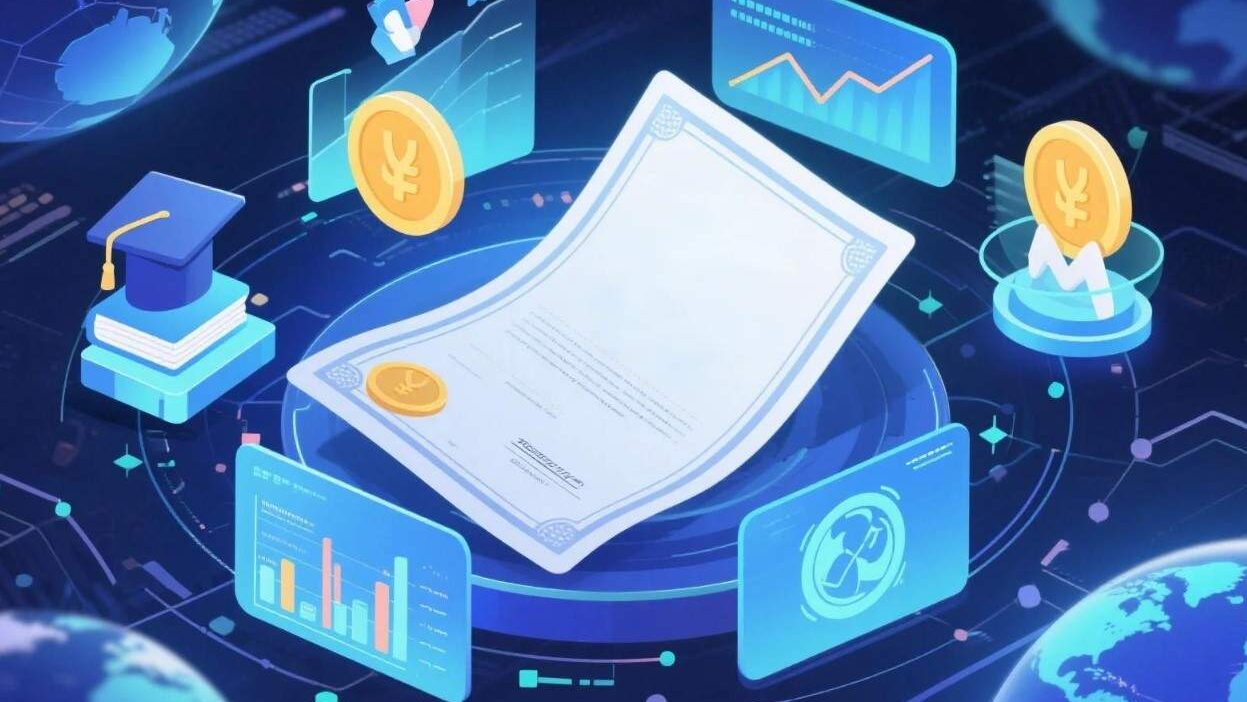
Tokenized education credentials are digital, blockchain-based records that represent a learner’s achievements, skills, or certifications. Built on decentralized ledgers (like Ethereum or Polygon), these tokens are:
- Immutable: Once issued, they cannot be altered or forged, ensuring trust.
- Portable: Stored in digital wallets, they can be shared instantly across borders and platforms.
- Interoperable: Designed to work across different systems, making them recognizable to employers, schools, and institutions worldwide.
For example, a coding bootcamp graduate might receive an ERC-1155 token representing their “Full-Stack Developer” certification. This token lives in their digital wallet, visible to recruiters, and can be combined with other tokens (e.g., a project management certification) to showcase a holistic skill set.
The Problem with Traditional Credentials in Lifelong Learning
Traditional education credentials—diplomas, transcripts, and paper certificates—are ill-suited for today’s fast-changing world:
- Static and Inflexible: They capture a single moment (e.g., graduation) but not the ongoing learning that happens afterward.
- Hard to Verify: Employers and institutions waste time cross-checking paper records, which are prone to loss or forgery.
- Siloed and Exclusionary: Credentials from one institution or country may not be recognized elsewhere, limiting mobility and opportunities.
Tokenized credentials solve these gaps by creating a dynamic, unified record of a learner’s entire journey—every course, project, and skill gained over a lifetime.
How Tokenized Credentials Work: Blockchain, Tokens, and Lifelong Growth
Tokenized education credentials rely on three key technologies to function seamlessly:
1. Blockchain: The Foundation of Trust
Blockchains provide a secure, decentralized ledger where credentials are stored. Each credential is a unique “token” (often an NFT or fungible token) with metadata detailing:
- The learner’s identity (via decentralized identifiers, or DIDs).
- The skill or achievement (e.g., “Advanced Data Analytics”).
- The issuer (e.g., a university, employer, or certification body).
- Timestamps and verification details (e.g., “Issued on [date] by [institution]”).
For example, MIT’s Digital Diploma program uses blockchain to issue NFT-based diplomas. Graduates can share their diplomas on LinkedIn or job portals, with employers verifying authenticity via the blockchain.
2. Smart Contracts: Automating Verification
Smart contracts—self-executing code on the blockchain—automate credential verification. When an employer or institution wants to check a credential, they trigger a smart contract that:
- Fetches the token from the blockchain.
- Validates its metadata (e.g., issuer, expiration date).
- Returns a “verified” or “invalid” response in seconds.
This eliminates manual checks and reduces fraud. In 2023, Coursera partnered with Blockcerts to issue blockchain-based course certificates, cutting verification time from days to minutes.
3. Decentralized Identity (DID): Learner-Owned Control
DIDs let learners manage their credentials without relying on a central authority. Instead of storing tokens on a platform (e.g., a university’s website), learners keep them in self-custodial wallets (e.g., MetaMask, Trust Wallet). This gives them full control over who sees their credentials and when—critical for privacy and portability.
Why Tokenized Credentials Are a Game-Changer for Lifelong Learning
1. Lifelong Skill Tracking: A Single Source of Truth
Learners accumulate skills over decades—from college degrees to on-the-job training, certifications, and micro-credentials. Tokenized credentials aggregate these into a single, searchable wallet. For example:
- A teacher might have tokens for “Master’s in Education,” “Google Classroom Certification,” and “Trauma-Informed Teaching Workshop.”
- An entrepreneur could showcase tokens for “MBA,” “Lean Startup Methodology,” and “ESG Compliance Training.”
This visibility helps learners identify skill gaps and tailor their learning journeys.
2. Faster, Fairer Opportunities
Employers and educators spend hours verifying credentials. Tokenized systems cut this to seconds, enabling:
- Hiring: Recruiters can quickly assess a candidate’s skills by reviewing their wallet, reducing time-to-hire.
- Upskilling: Learners can apply for promotions or new roles by proving they’ve mastered in-demand skills (e.g., “AI Ethics” or “Cybersecurity”).
A 2023 survey by LinkedIn found that 78% of hiring managers value verifiable digital credentials more than traditional degrees, as they offer clearer proof of current skills.
3. Inclusivity and Accessibility
Tokenized credentials lower barriers to education:
- Cost: Issuing digital tokens is cheaper than printing and mailing physical certificates.
- Accessibility: Learners in remote areas can access credentials via mobile wallets, even without reliable internet.
- Recognition: Cross-border credentials (e.g., a coding certificate from a Kenyan institute) are accepted globally, boosting mobility.
4. Empowerment Through Ownership
Learners own their credentials, not institutions. They can:
- Share tokens selectively (e.g., only with potential employers).
- Combine tokens to tell a personalized story (e.g., “From Intern to Manager: My Journey in Project Management”).
- Sell or trade tokens (in some cases) to fund further learning.
Challenges and Solutions
While transformative, tokenized credentials face hurdles:
1. Adoption Barriers
Many institutions and employers are unfamiliar with blockchain. To drive adoption:
- Pilot Programs: Universities (e.g., MIT, Stanford) and corporations (e.g., IBM, Salesforce) are testing tokenized credentials, setting precedents.
- Regulatory Support: Governments (e.g., the EU, Singapore) are exploring frameworks to recognize blockchain-based credentials legally.
2. Technical Complexity
Building and managing tokenized systems requires expertise in blockchain, smart contracts, and cybersecurity. Solutions include:
- User-Friendly Platforms: Tools like Credly and Blockcerts simplify credential issuance and verification for institutions.
- Interoperability Standards: Frameworks like the W3C Verifiable Credentials standard ensure tokens work across platforms.
3. Privacy and Security Risks
Storing credentials in digital wallets requires robust security. Risks include:
- Wallet Hacks: Learners must use secure wallets (e.g., hardware wallets) to protect tokens.
- Data Breaches: Blockchain’s immutability protects credentials, but user data (e.g., wallet addresses) must be encrypted.
4. Bias and Inequity
If token issuers (e.g., universities) favor certain groups, tokens could perpetuate inequality. Solutions include:
- Diverse Issuers: Encouraging community colleges, online platforms, and employers to issue tokens.
- Audits: Third-party audits to ensure credentialing criteria are fair and transparent.
Real-World Examples: Tokenized Credentials in Action
- MIT’s Digital Diplomas: MIT issues NFT-based diplomas via the Blockcerts platform. Graduates can share their diplomas on LinkedIn, and employers verify them via the blockchain—eliminating paper copies.
- Coursera + Blockcerts: Coursera partners with Blockcerts to issue blockchain-based course certificates. Learners store these in digital wallets, making it easy to showcase skills to employers.
- Singapore’s SkillsFuture: Singapore’s national upskilling initiative uses tokenized credentials to track lifelong learning. Citizens earn tokens for completing courses, which can be redeemed for subsidies or career advancement.
- IBM’s Digital Badges: IBM issues blockchain-based badges for its employees’ upskilling achievements. These badges are visible on professional networks, boosting career mobility.
The Future: Tokenized Credentials as a Lifelong Learning Ecosystem
The future of tokenized education credentials is bright, with innovations on the horizon:
- AI-Driven Credentialing: Machine learning could analyze a learner’s activity (e.g., project completions, skill tests) to auto-issue micro-credentials, reducing manual effort.
- Metaverse Integration: Credentials could be displayed in virtual worlds (e.g., Decentraland), creating immersive “skill galleries” for networking and job fairs.
- Global Standards: Initiatives like the UN’s Digital Public Infrastructure aim to standardize tokenized credentials worldwide, ensuring seamless cross-border recognition.
Your Lifelong Learning, Your Control
Tokenized education credentials are more than a technological novelty—they’re a revolution in how we value and track growth. By turning lifelong learning into a visible, verifiable journey, they empower individuals to take ownership of their skills, unlock opportunities, and thrive in a rapidly changing world.
Whether you’re a student, professional, or educator, now is the time to embrace tokenized credentials. Your next skill, certification, or achievement deserves to be celebrated—and shared—with the world.